NOTICIAS

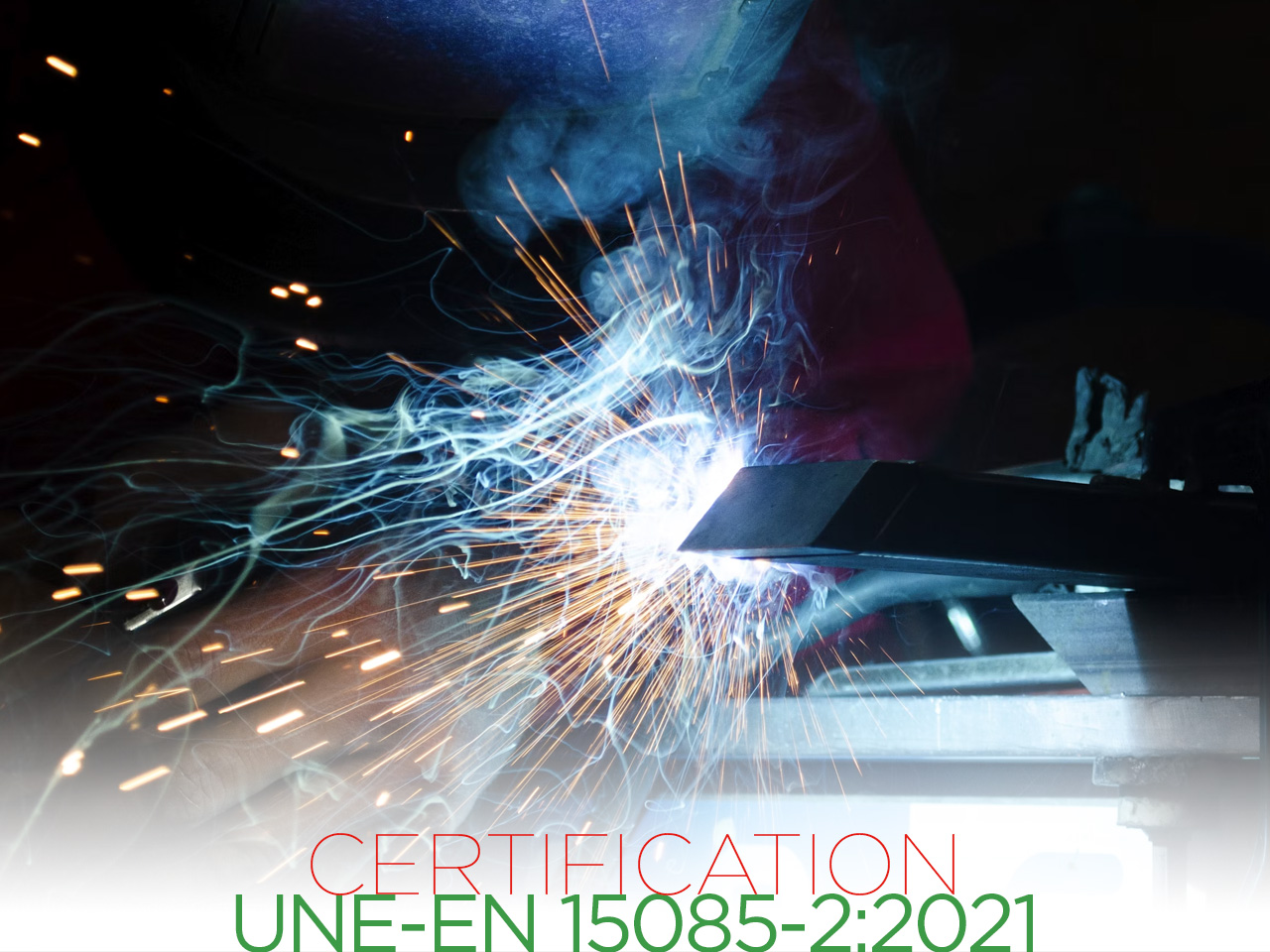
UNE-EN 15085-2:2021 standard: certification levels, weld thicknesses and requirements for railway manufacturing

Safety, reliability, and traceability are fundamental aspects of the railway industry. Every component installed on a train must meet stringent quality requirements to ensure safe operation throughout its lifespan. In this context, EN 15085 has become the benchmark standard for welding railway vehicles and their components.

However, many questions remain among manufacturers, purchasing departments, and engineering firms regarding the actual implications of this certification, the different levels of certification, the maximum thicknesses that can be welded, and how it affects supplier selection.

"EN 15085 is the European standard that regulates the welding of railway vehicles and their components"


MEPAT’s experience in railway manufacturing


Since 2013, MEPAT has operated under the requirements of EN 15085, holding CL1 certification for activity P, the highest level of certification for railway manufacturers.

The company offers:

• IWE Welding Coordinator.
• Approved procedures for steel, stainless steel, and aluminum.
• MAG and TIG welding processes.
• Manufacturing of complete structures, subassemblies, and components.
• Machining and assembly capabilities.
• In-house visual inspection and penetrant testing.
• Collaboration with specialized laboratories for destructive and non-destructive testing.

This combination of experience, technical expertise, and industrial capacity allows MEPAT to undertake complex railway projects with the highest guarantees of quality and traceability.


What is the EN 15085-2:2021 standard?


EN 15085 is the European standard that regulates the welding of railway vehicles and their components. Its main objective is to ensure that all welded joints used in the railway sector meet quality, safety, and traceability requirements appropriate to the criticality of each component.

The standard establishes requirements related to:
• Manufacturer qualifications.
• Welding personnel competence.
• Approved procedures.
• Welding coordination.
• Inspection and quality control.
• Document traceability.

Its application is mandatory for the manufacture of numerous railway components intended for both new vehicles and modernization and maintenance projects.


What levels of certification exist?


The standard classifies manufacturers according to different certification levels based on the criticality of the components they produce.

CL1: The highest certification level
Level CL1 is for manufacturers of components with the highest safety requirements for railway vehicles. Companies certified at this level are authorized to manufacture components belonging to all execution classes defined by the standard.

This level requires:
• Highly qualified personnel.
• A specialized welding coordinator.
• Approved procedures.
• Comprehensive document controls.
• Advanced traceability systems.

CL2: For manufacturers of components with significant structural requirements but lower criticality than those included in CL1.

CL3: Applicable to components with less stringent structural and safety requirements.

"MEPAT has CL1 EN-15085 certification level"


What type of activity can the manufacturer perform?


A manufacturer of welded railway vehicles or components may perform one or more of the activities listed below. All activities must comply with the requirements defined in the relevant part of the ISO/IEC 15085 series of standards:

D – Design: Calculation, design, and documentation for the production and maintenance of welded railway vehicles and components.

P – Production: Manufacturing, modification, and testing of welded railway vehicles and components (including spare parts).

M – Maintenance: Repair of welded railway vehicles and welded components (including testing).

S – Purchasing and Supply: Purchasing and supplying welded components for new manufacturing or maintenance activities, without performing welding activities.
 

How important is the welding coordinator?


One of the fundamental pillars of EN 15085 is the role of the Welding Coordinator.

Their mission is to supervise procedures, verify qualifications, ensure regulatory compliance, and coordinate the necessary controls during manufacturing.

The presence of a certified professional guarantees that each welded joint is performed in accordance with the requirements established by the standard.


Welding thicknesses and common materials


The EN 15085 standard does not establish a single thickness range applicable to all manufacturers. Actual capacity depends on the certifications obtained by each company and their qualified procedures.

In the case of MEPAT, certification allows them to work with:

Materials

Carbon steel
Stainless steel
Aluminum

Certified processes

MAG welding
TIG welding

Typical thickness range

From 1 mm to 6 mm

This capacity allows them to manufacture a wide variety of structures and components commonly used in the railway sector.


Which railway components require certified welding?


Among the components that typically require manufacturing according to EN 15085 are:

• HVAC structures.
• Drip trays.
• Frames.
• Technical racks.
• Electrical cabinets.
• Structural components for railway vehicles.
• Metal subassemblies for onboard systems.
• Supports and auxiliary structures.

Certification guarantees that these components have been manufactured following controlled and fully traceable procedures.


What controls does the standard require?


The quality of a weld cannot be based solely on a final visual inspection. EN 15085 establishes different control methods depending on the criticality of the component:

Visual inspection

Detects surface defects, discontinuities, and dimensional deviations.

Penetrant testing

Used to detect surface defects not visible to the naked eye.

Ultrasound and radiography

Used when the project requirements demand verification of internal weld defects.

The combination of these controls provides a high level of safety and reliability for railway components.


Why is it important to choose a certified supplier?


Selecting an EN 15085 certified supplier not only guarantees regulatory compliance.

It also provides direct advantages for manufacturers and engineering firms:

• Reduced quality risks.
• Improved document traceability.
• Compliance with audit requirements.
• Fewer incidents throughout the product’s lifecycle.
• Enhanced safety in international projects.
• Greater confidence for customer approvals and validations.

In sectors where safety is paramount, the supplier’s experience and certification make all the difference.


In summary


The EN 15085 standard is much more than a certification. It represents a guarantee of quality, safety, and control for all stakeholders involved in railway manufacturing.

Working with a CL1-certified manufacturer minimizes risks, ensures regulatory compliance, and provides an industrial partner capable of meeting the demands of one of the world’s most regulated sectors.

In an environment where reliability is paramount, experience and specialization remain crucial factors for the success of any railway project.