NOTICIAS

The carbon footprint as a criterion for the selection of industrial suppliers

For years, in the industrial sector, supplier selection has been based on three main variables: quality, price and delivery times.

Today, that scenario is evolving. More and more companies are incorporating a new factor into their decisions: the carbon footprint.


Carbon footprint measurement: the starting point


In industrial environments such as MEPAT, measurement has always been an essential part of the work. Processes, times, materials… Everything is controlled because we know that what is not measured cannot be improved.

Carbon footprint measurement follows that same logic: turning environmental impact into concrete data that can be analyzed, compared and optimized.

In this sense, at MEPAT we began in 2025 to work on measuring our carbon footprint together with Dcycle. Currently, MEPAT is in an initial phase, focused on data collection and the definition of the base year.

This process is allowing MEPAT to understand in greater depth to what extent it is possible to measure and trace the impact of the entire production process.

At MEPAT everything is controlled because we know that what is not measured cannot be improved"


The carbon footprint in the supply chain


One of the key aspects in measuring the carbon footprint is that it is not limited to the internal activity of the company.

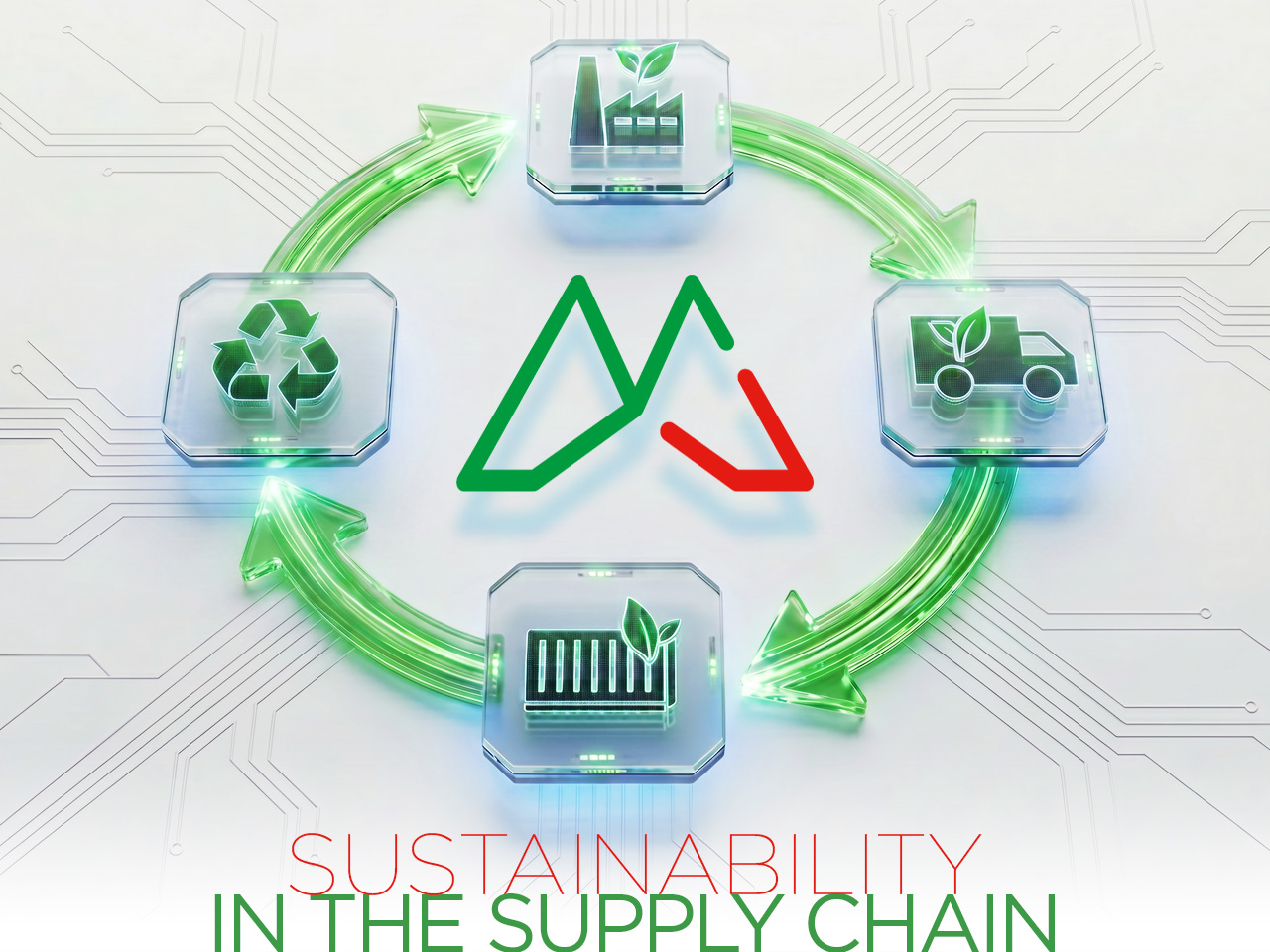
Materials, transport and suppliers are part of the carbon footprint of the supply chain, which in many cases represents a very significant part of the total impact.

For this reason, more and more industrial companies are requesting information related to carbon footprint from their suppliers. This trend is transforming the relationship between customer and supplier, introducing new levels of transparency and traceability.

In this context, MEPAT understands that the value chain plays a key role in carbon footprint measurement, as it allows for a more complete view of the impact associated with each project.


The carbon footprint as data in decision-making


The carbon footprint is starting to be incorporated as an additional data point in industrial decision-making processes.

Just as costs or lead times are analyzed, the carbon footprint makes it possible to assess the impact associated with a product, a process or a supplier.

For this to be possible, it is essential that carbon footprint measurement is reliable, comparable and traceable.

The most demanding customers are looking for suppliers capable of providing not only quality and compliance"


The role of MEPAT as an industrial supplier


For MEPAT, carbon footprint measurement does not represent a change of model, but rather a natural evolution of its way of working.

Process control, material optimization and production efficiency have always been part of MEPAT’s DNA. The difference is that now these same principles are also applied to measuring environmental impact.

Furthermore, this progress responds to a clear reality: MEPAT’s customers are incorporating carbon footprint into their own analyses.

Especially the most demanding ones, who are looking for suppliers capable of providing not only quality and compliance, but also reliable information about their carbon footprint.

MEPAT and carbon footprint measurement: a process under development


Currently, MEPAT is in an initial phase in the measurement of its carbon footprint, working together with Dcycle on data collection and structuring.

This process is allowing MEPAT to organize and analyze information that until now had not been approached from this perspective, strengthening its ability to control its processes.

The objective is clear: to move towards data-based management that allows analysis, comparison and continuous improvement.

The future of carbon footprint in industry


Everything points to the fact that carbon footprint will be an increasingly present element in industry.

It will not replace traditional criteria, but it will be integrated as an additional variable in supplier selection and in supply chain management.

In this context, MEPAT continues to move forward in the measurement of its carbon footprint with the aim of adapting to new market demands and continuing to provide value to its customers.

Measuring, analyzing and improving is not an obligation, but a real commitment to the efficiency and traceability of our processes"

 
* We highlight that the declaration of the carbon footprint at MEPAT is completely voluntary, as we are not legally required to do so. This step is part of our strategy of continuous improvement and transparency towards our customers.